 Google Scholar
 ORCID
 Scopus
 LinkedIn
Power and renewable energy
Wind and solar conversion, microgrids and smart grids, load forecasting, EV charging networks and cyber-secure power electronics.
Energy publications →Glasgow Caledonian University
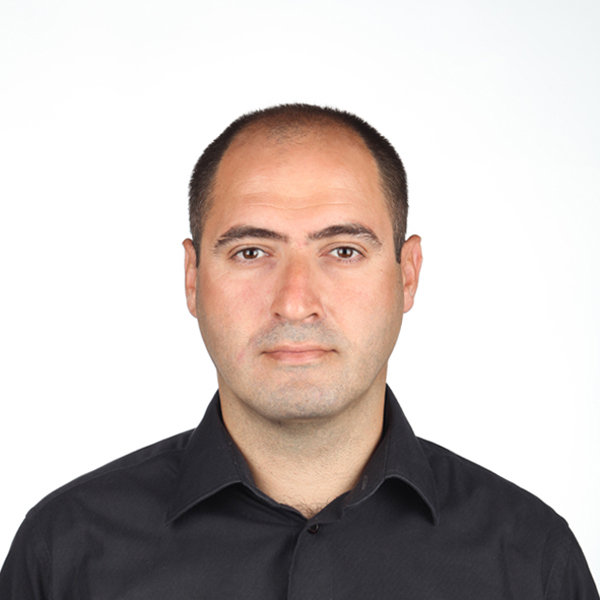
Reader in Control, Robotics and Applied AI School of Science and Engineering, Glasgow Caledonian University
I study how learning-based methods can be given the guarantees that control theory provides. My work joins robust and predictive control with data-driven design, reinforcement learning, generative AI, large language models and expert systems, and applies them to power and renewable energy, biological and biomedical systems, and autonomous robots.
Current work
My most recent work takes data-driven predictive control beyond linear systems, to machines whose dynamics are strongly nonlinear: aerial, legged and humanoid robots. The controllers are built from recorded data instead of a hand-derived model, and are designed to stay safe when conditions differ from that data.
Aerial robot
A quadrotor gathers a short burst of flight data at its launch point. A predictive controller built from that data then flies it past storage racks it discovers on the way.
Quadruped
Two controllers drive the same four-legged robot along a course marked by pylons, across stepping logs and then a sheet of ice, where they part company.
Humanoid
A humanoid robot takes on the same kind of course: raised planks first, then wet, slippery ground.
Data-driven predictive controller Conventional baseline controller
Simulation studies from manuscripts in preparation. The methods will be described here once the papers are published.
Methods
Classical control and modern AI are treated as parts of one design problem, chosen for what can be guaranteed as well as for what performs best.
All research themes →Robust, optimal and predictive control: H∞ and LMI-based design, tube and event-triggered MPC, sliding-mode and adaptive methods for uncertain, delayed and constrained systems.
Controllers designed directly from measured trajectories, without first identifying a model: data-enabled predictive control (DeePC) and data-driven H∞ design with stability and constraint guarantees, now being extended to nonlinear machines such as aerial and legged robots.
Deep reinforcement learning for long-horizon decisions, where reward arrives late and credit is hard to assign, and learning-guided optimisation for large design problems.
Where generative AI and LLMs add value in engineering systems (forecasting, design, operation and decision support), and how far their outputs can be relied on.
Knowledge-based and probabilistic reasoning, from fuzzy inference to Bayesian networks, for diagnosis, reliability assessment and supervisory decisions that stay explainable.
The common thread
A method earns its place in a wind turbine, a treatment plan or a robot working beside people only if it keeps behaving well when the model is wrong, the data are noisy or a component fails. Four questions run through every project.
Does performance hold under model uncertainty, disturbances, delays and actuator limits?
Are state and input constraints respected at every step, even when the controller is built from data alone?
Does the system detect and ride through sensor faults and cyber-attacks?
Is it data-efficient and light enough to run in real time on real hardware?
Applications
Three domains where a wrong decision is expensive, and where guarantees matter as much as performance.
Wind and solar conversion, microgrids and smart grids, load forecasting, EV charging networks and cyber-secure power electronics.
Energy publications →Treatment as a feedback problem: data-driven dosing for cancer therapy, and powered prostheses that adapt to the wearer's gait.
Biomedical publications →Aerial, legged, ground, underwater and collaborative robots, and autonomous vehicles that keep their passengers comfortable.
Robotics publications →Publications
The most recent entries from the full publication list.
All publications →Leadership
Work for the control and robotics community, in the UK and internationally.
Background
I received my BSc, MSc and PhD degrees in Electrical Engineering from Yıldız Technical University (YTU), Istanbul, in 1997, 1999 and 2002. At YTU I was Assistant Professor (2004–2010), Associate Professor (2010–2015) and Full Professor (2015–2017). I joined Glasgow Caledonian University in 2017 and have been a Reader since 2021.
I was Glasgow Caledonian University's Principal Investigator on ROBMAN, an EPSRC project on robust robotic manipulation underwater with Heriot-Watt University and Subsea 7, and my research has attracted competitive and industrial funding. I have supervised six PhD students to completion and examine doctoral theses in the UK and abroad.
Teaching
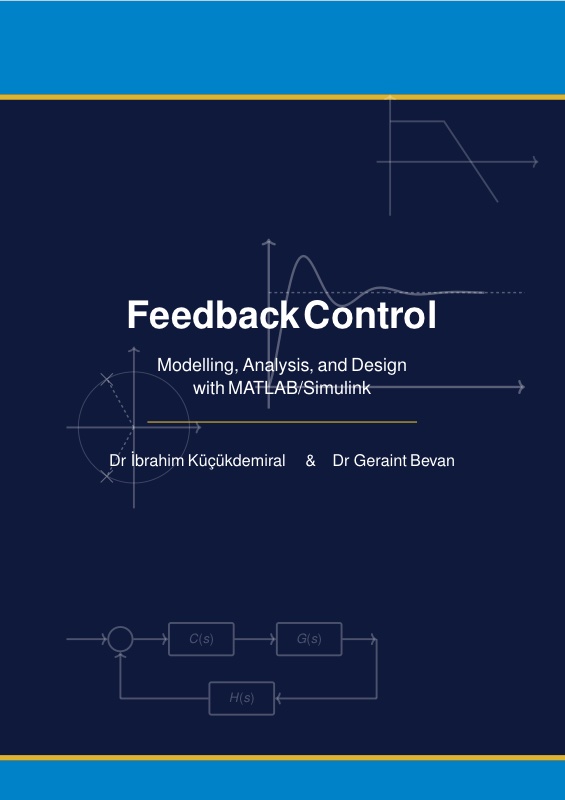
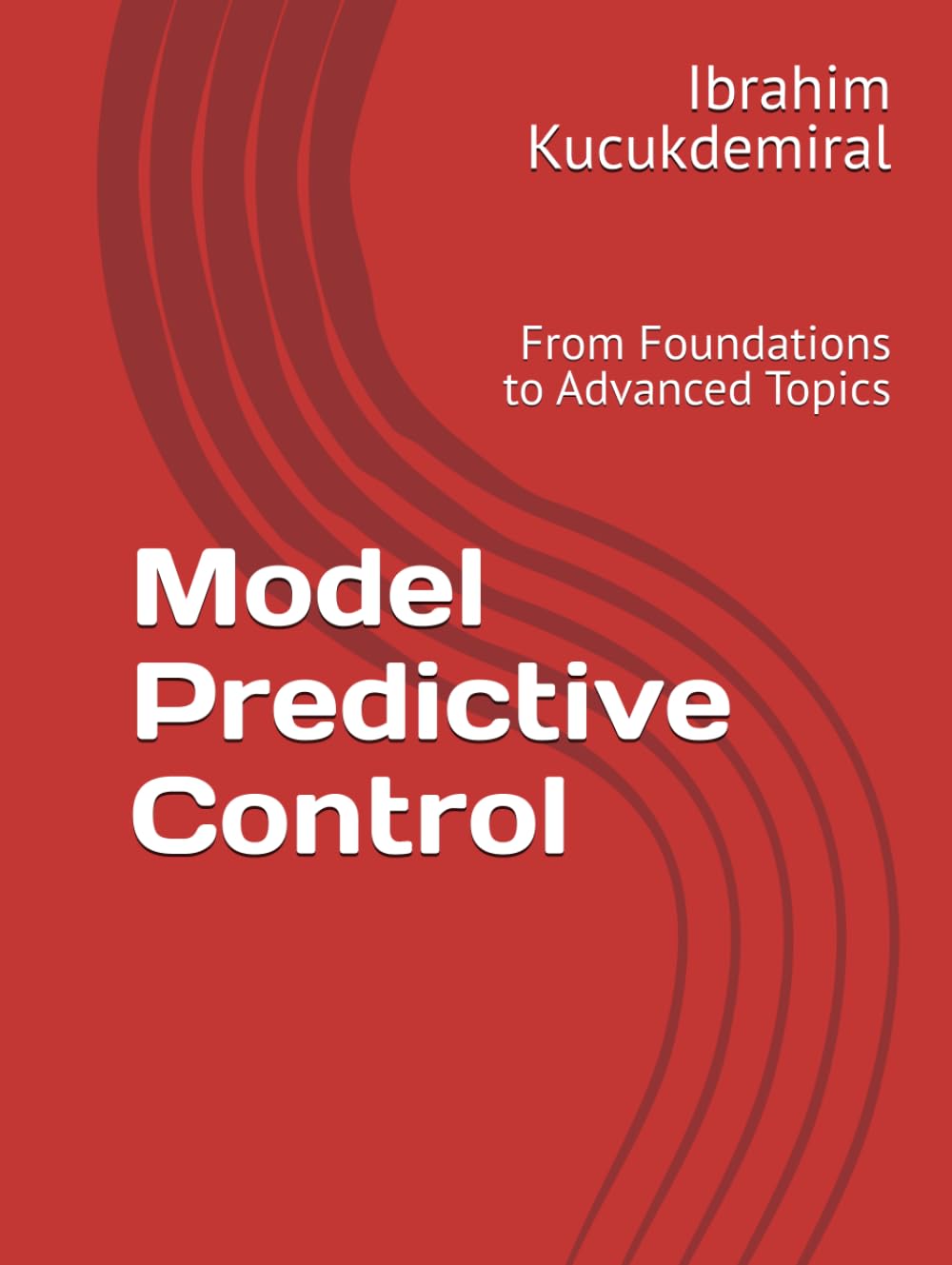
Interactive course materials with full textbook chapters, worked MATLAB and Python examples, and hands-on simulation tools.
All teaching material →I welcome enquiries about research collaboration, PhD supervision and academic partnerships.